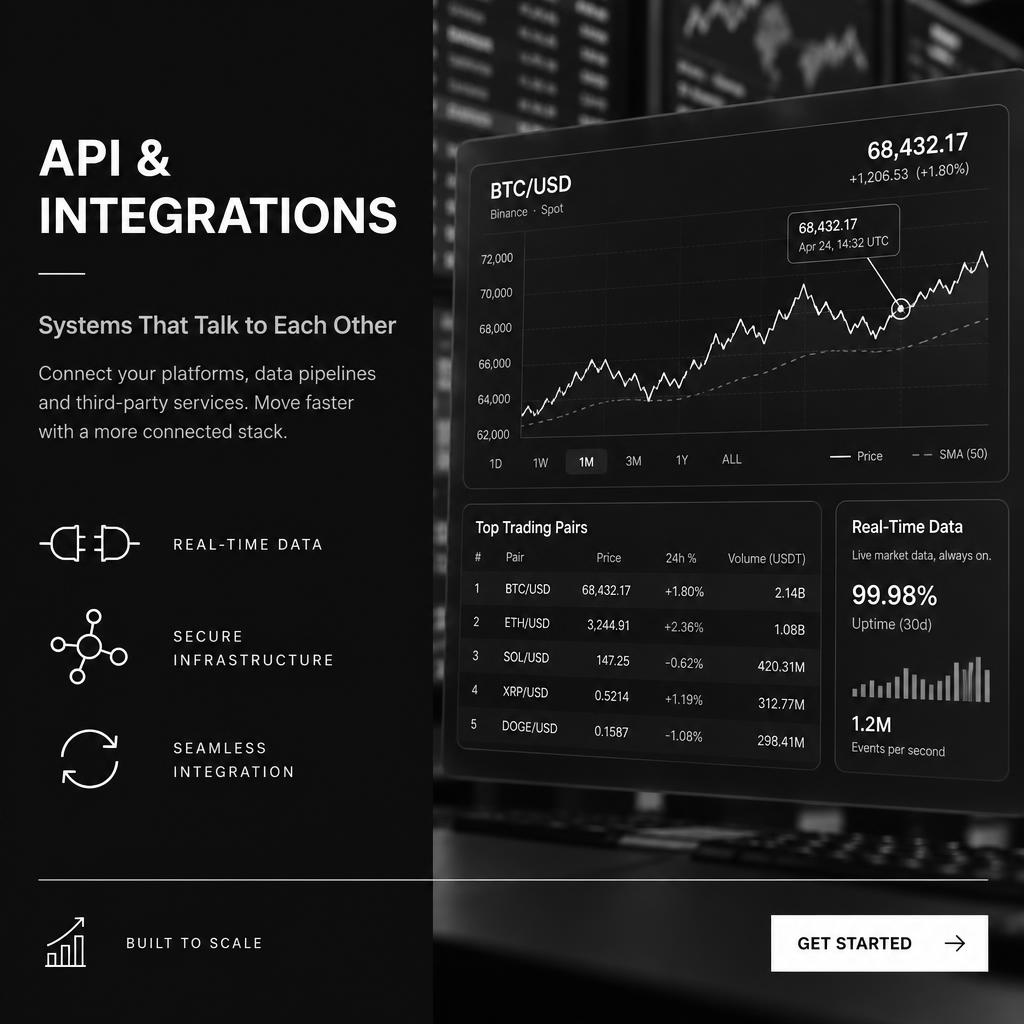


Financial dashboards people actually trust
Accuracy, latency and clear provenance matter more than chart variety when money decisions depend on a screen.
01
Trust is the product
A financial dashboard is judged on one thing: whether the person reading it believes the numbers. Visual polish helps, but trust is built from data provenance, refresh behaviour and consistency between views.
02
Make stale data visible
The most common failure is silent staleness. A figure that stopped updating twenty minutes ago looks identical to one that updated a second ago. Showing the data timestamp, the source and the connection state costs very little and prevents expensive mistakes.
03
One calculation, used everywhere
Consistency is the second pillar. If a total on one screen disagrees with the sum of its parts on another, everything else on the product loses credibility. Aggregations should be calculated once, server side, and reused everywhere.
04
Restraint improves decisions
Finally, restraint. Most financial users want a small number of figures they can read instantly, with detail available on demand. Density is valuable only when every element earns its place.
Share this article